Why does popcorn pop?
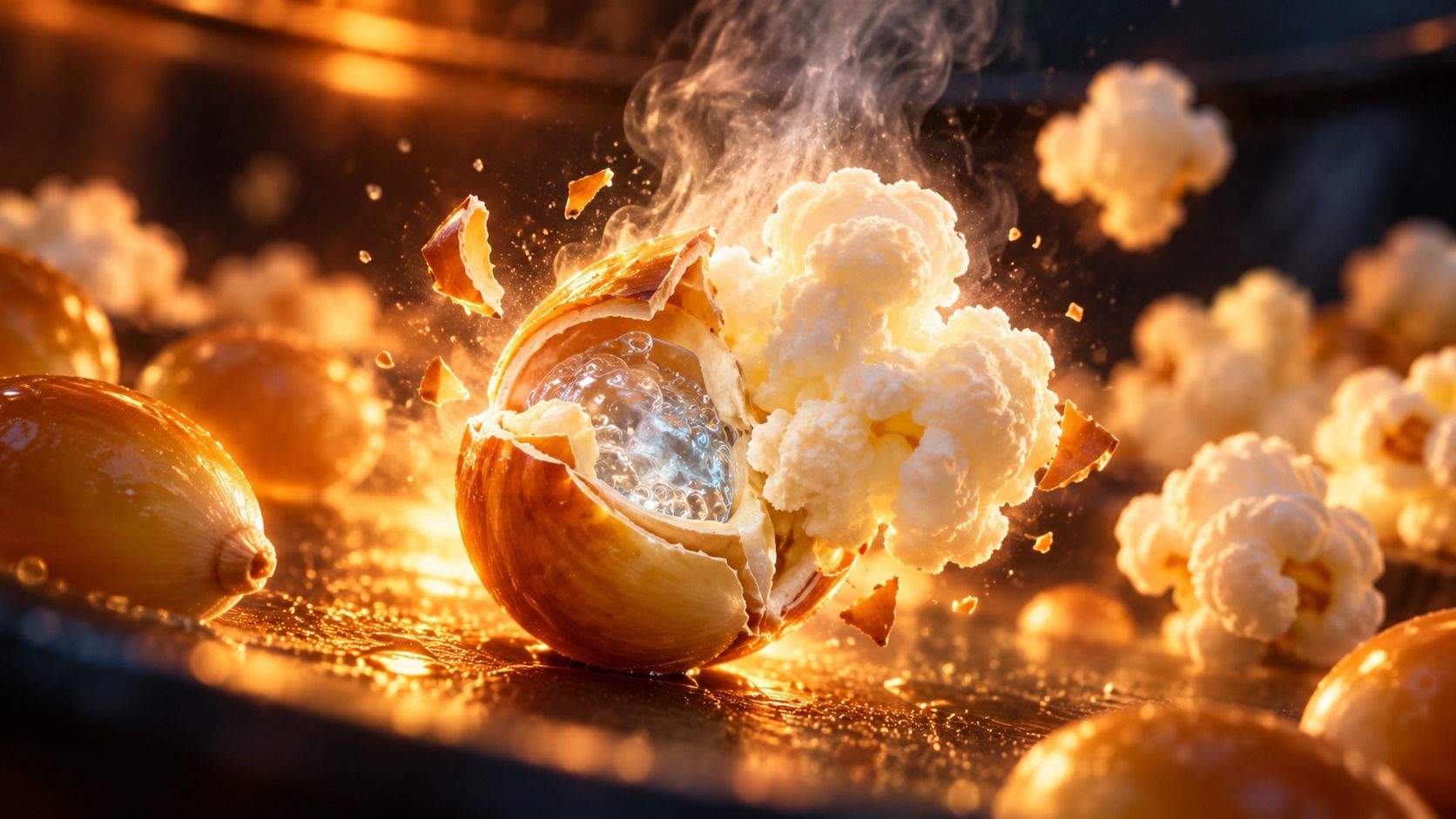
Each kernel holds a drop of water inside a tough shell. When heated, the water turns to steam and builds up pressure until the shell bursts and the soft starch puffs out into a fluffy flake.
A drop of water hides inside
Each kernel contains a tiny amount of water, about 14 percent of its weight, packed in with soft starch. When the kernel heats up, that water starts turning into steam.
Share this stepThe shell holds the pressure
The kernel’s hard, waterproof shell traps the steam. Pressure inside climbs to about nine times normal air pressure, while the starch softens into a hot gel.
Share this stepThe shell bursts and the starch puffs
At around 180 °C (356 °F) the shell gives way. The steam rushes out, the starch foam expands to many times its size and sets almost instantly into a crunchy white flake.
Share this stepEvery pop is a tiny steam explosion.
Waterheatpop
The popping sound is the shell cracking and the steam escaping. Kernels that stay hard usually had a leaky shell or had dried out, so the pressure could never build up.
Common follow-up questions
Why don’t some kernels pop?
Either the shell has a tiny crack that lets the steam leak out, or the kernel has dried out and doesn’t hold enough water to build pressure.
Can any corn pop?
No. Only popcorn varieties have a shell that’s strong and airtight enough. Sweet corn and field corn just dry out or burn.
Why does popcorn come in different shapes?
Some kinds pop into round “mushroom” shapes that hold coatings well, others into wide “butterfly” shapes with wings, common at movie theaters.
Is popcorn healthy?
Plain air-popped popcorn is a whole grain and low in calories. Butter, oil and salt are what add up.