How do antibiotics work?
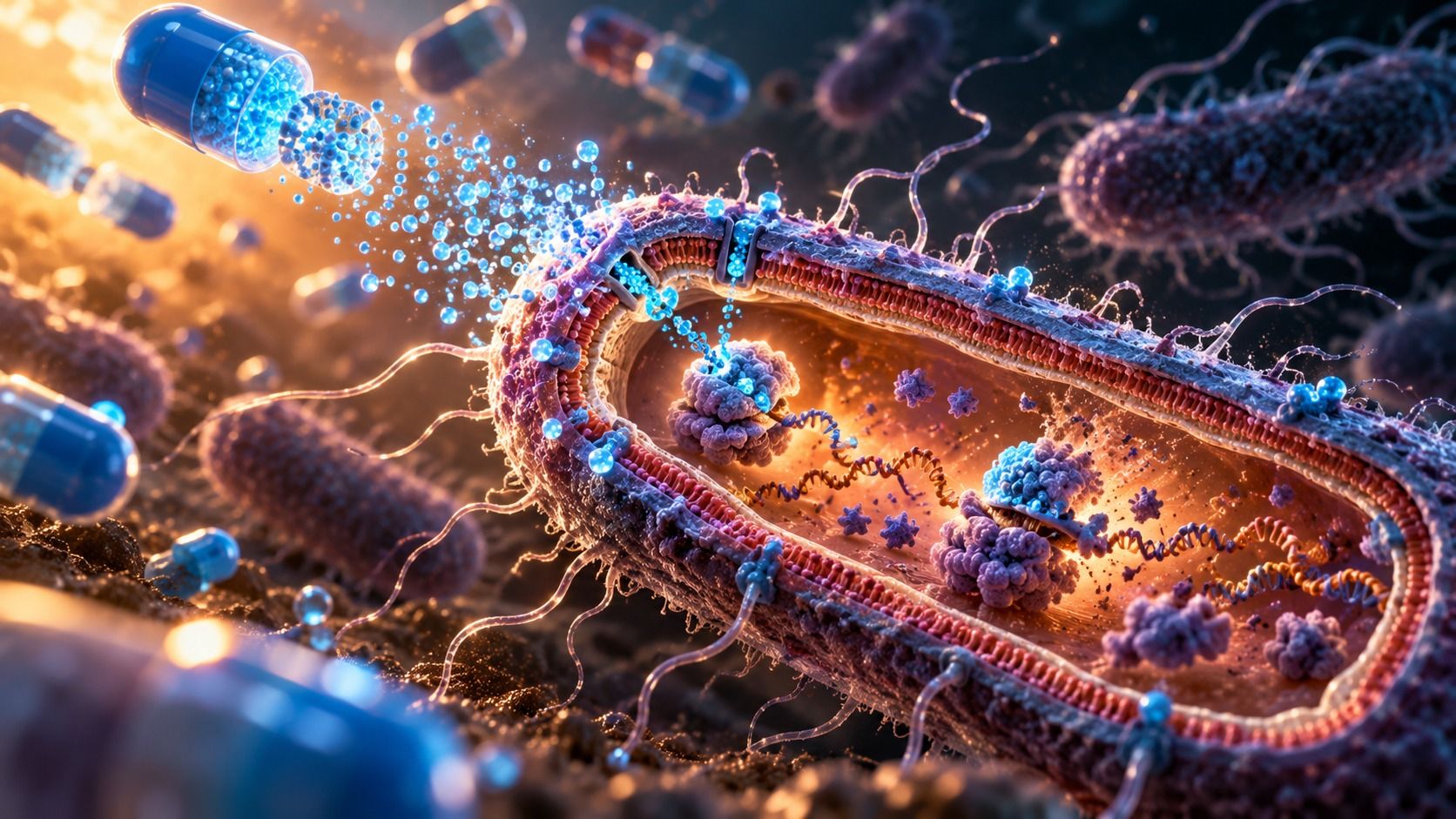
Antibiotics attack parts that only bacteria have, such as their cell wall and their protein factories. The bacteria stop multiplying and your immune system clears the rest. They don’t work on viruses.
The medicine finds the bacteria
The capsule dissolves in your stomach and the drug travels through your blood. It only acts where there are bacteria to attack.
Share this stepBacteria have parts you don’t
A bacterium has a wall and its own protein factories, both different from yours. Antibiotics target exactly those. Viruses have neither, which is why antibiotics don’t help with colds or flu.
Share this stepThe bacterium can’t grow
This type of antibiotic jams the bacterium’s protein factories. Other types break down the wall. Either way the bacteria stop multiplying, and your immune system catches up.
Share this stepWhy your stomach can get upset
The medicine can’t tell the bacteria making you sick from the good bacteria in your gut. When the good ones drop too, an upset stomach is common.
Share this stepThe survivors take over
Now and then a single bacterium has a trait that protects it. It survives and multiplies. The more often antibiotics are used, the more resistant bacteria spread.
Share this stepThey stop bacteria, not viruses.
Antibioticsyour immune systemhealthy
Only take them when a doctor prescribes them, take them exactly as prescribed and don’t save leftover pills. That keeps them working next time too.
Common follow-up questions
Why don’t antibiotics work on a cold?
Colds are caused by viruses. Viruses have no cell wall and no protein factories of their own, so antibiotics have nothing to attack.
How quickly will I feel better?
Often within two to three days. Contact your doctor if you don’t improve or get worse.
Why shouldn’t I save leftover pills?
The right drug and dose depend on the infection. The wrong medicine at the wrong time gives bacteria a chance to become resistant.
Can I drink alcohol while taking antibiotics?
With most types, moderate drinking is fine, but a few react badly with alcohol. Ask your pharmacist about your specific medicine.